
The Brain / Capabilities / Silence detection
SENSEIt notices when nothing has happened
for too long.
A thread quiet for nine days, an approval nobody chased: no system records these, so the Brain works them out from the last thing that did happen.
Book a demo See it running first
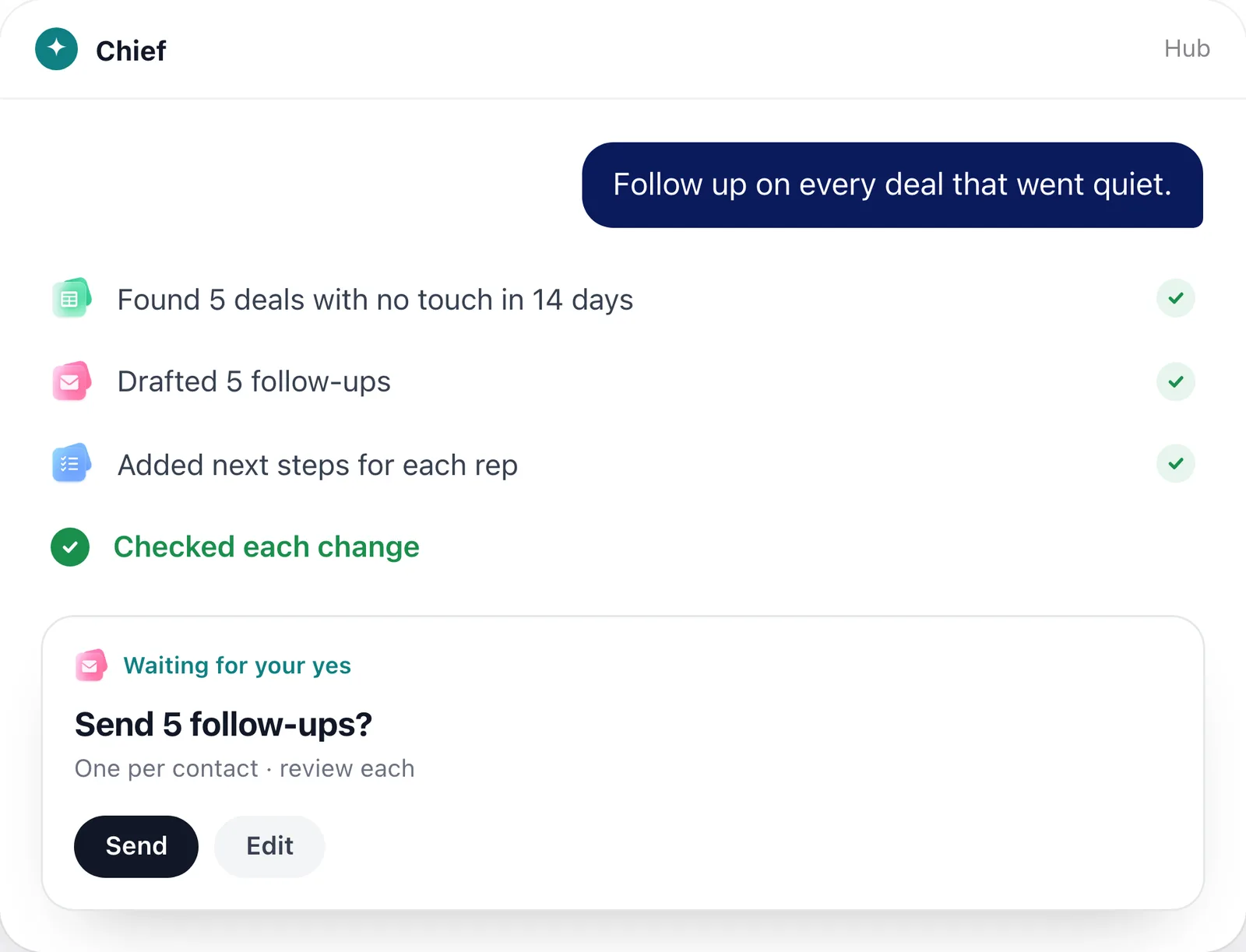
Three quiet things, one raised
An approval passes eleven days silent
The last event is the request itself, and eleven days is not a threshold, it is simply how long it has been.
Two other quiet records are dropped
An undated backlog task and a thread about a decision closed elsewhere, neither worth a morning.
One item, chase already written
The approval blocks two dated tasks and a Thursday review, so it is raised once with a drafted reply for a person to send.
Three mechanisms
Absence is derived from the last event
Every record carries a last-touched time, quiet is the gap between that and now, and there is no reminder to forget.
A gap is only a candidate
A quiet record is raised only when the silence has a consequence, judged against your written policy.
Raised once, not daily
Each item is raised once and updated in place, inside a cap of 40 interruptions an hour company-wide and 5 per person.
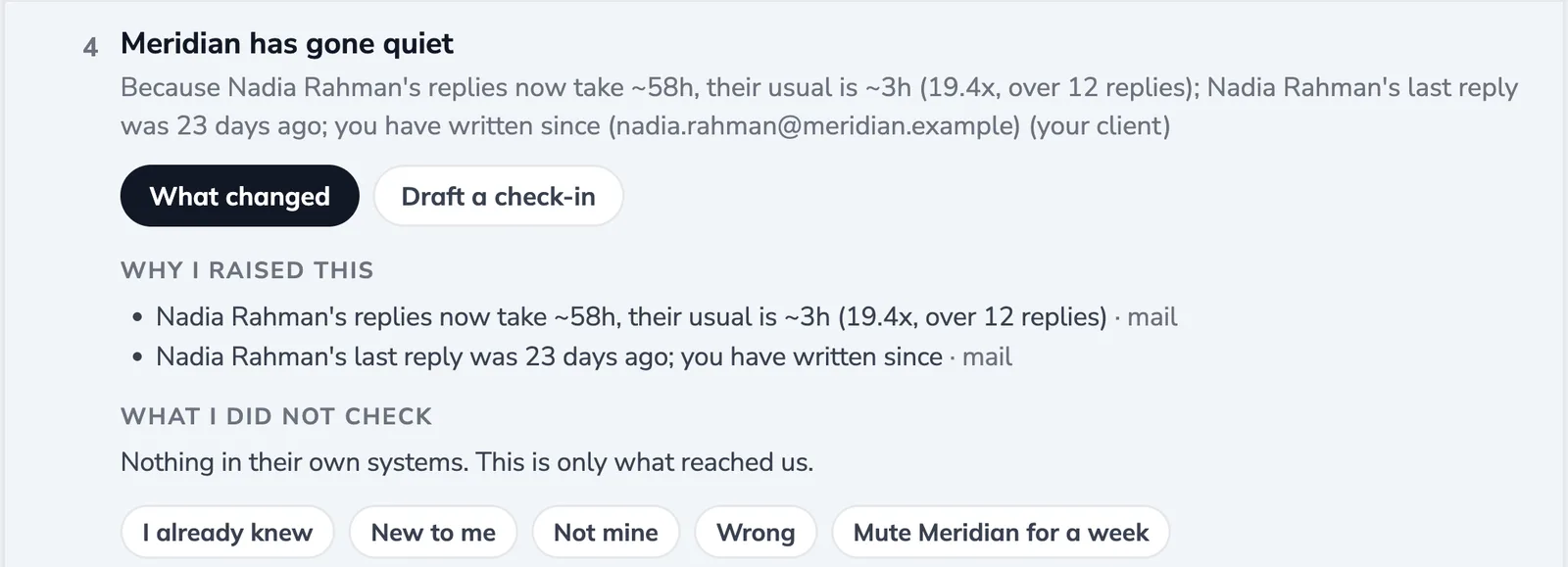
Three honest limits
It cannot see silence in an unconnected system.
It does not know a thread was settled over lunch.
Not a productivity monitor; records, not humans.
Updated 15 September 2026 · WE_AINA