
Your systems know. Nothing remembers.
One memory across CRM, mail, tickets and documents, asking before it writes.
Four numbers, all of them ours
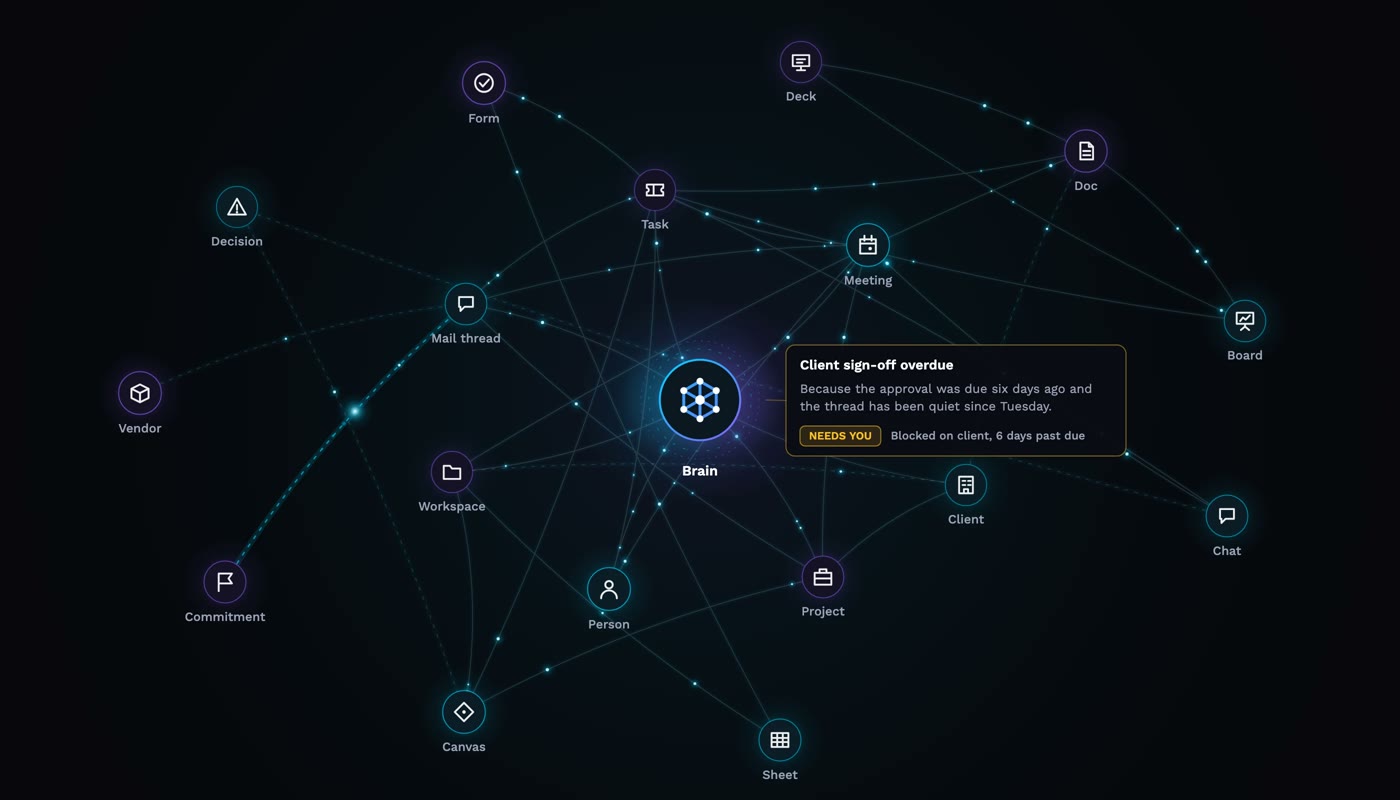
WorkElate Chief, the Brain, is one memory across the systems a 200 to 2,000 person company already runs, made by WorkElate and installed by WE_AINA, WorkElate's own studio: it reads what your CRM, mail, tickets and documents already record, judges what needs a person, and asks before it changes anything.
Things it can be asked to do.
Actions inside our own apps. 71 stop for a person.
Operations hours returned to one client in twelve months.
Invoices matched with zero manual touches, same twelve months.
Two weeks on one of your systems, fixed fee; then a build priced before it starts. The capability inventory.
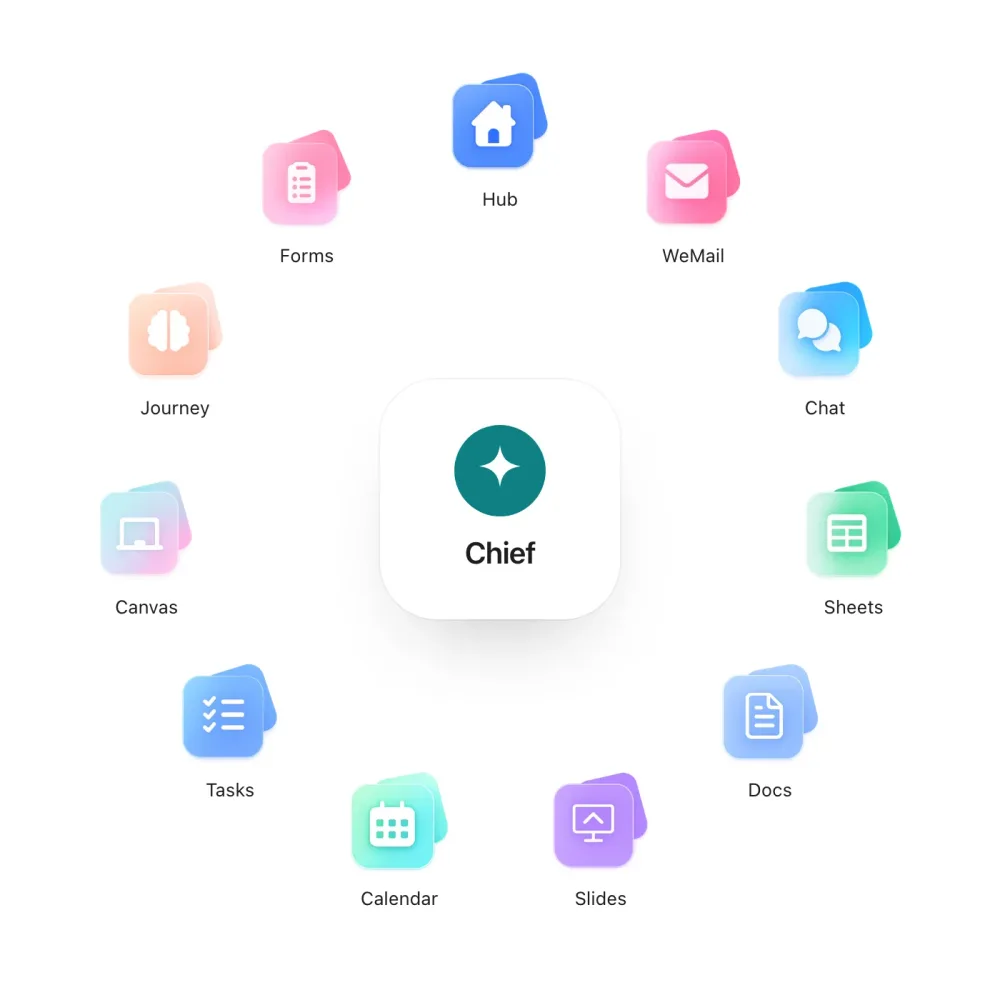
The same five systems. One picture.
A project tool, chat, mail, documents and a calendar. Each holds a piece of the answer, none the answer.
-
Monday 09:10
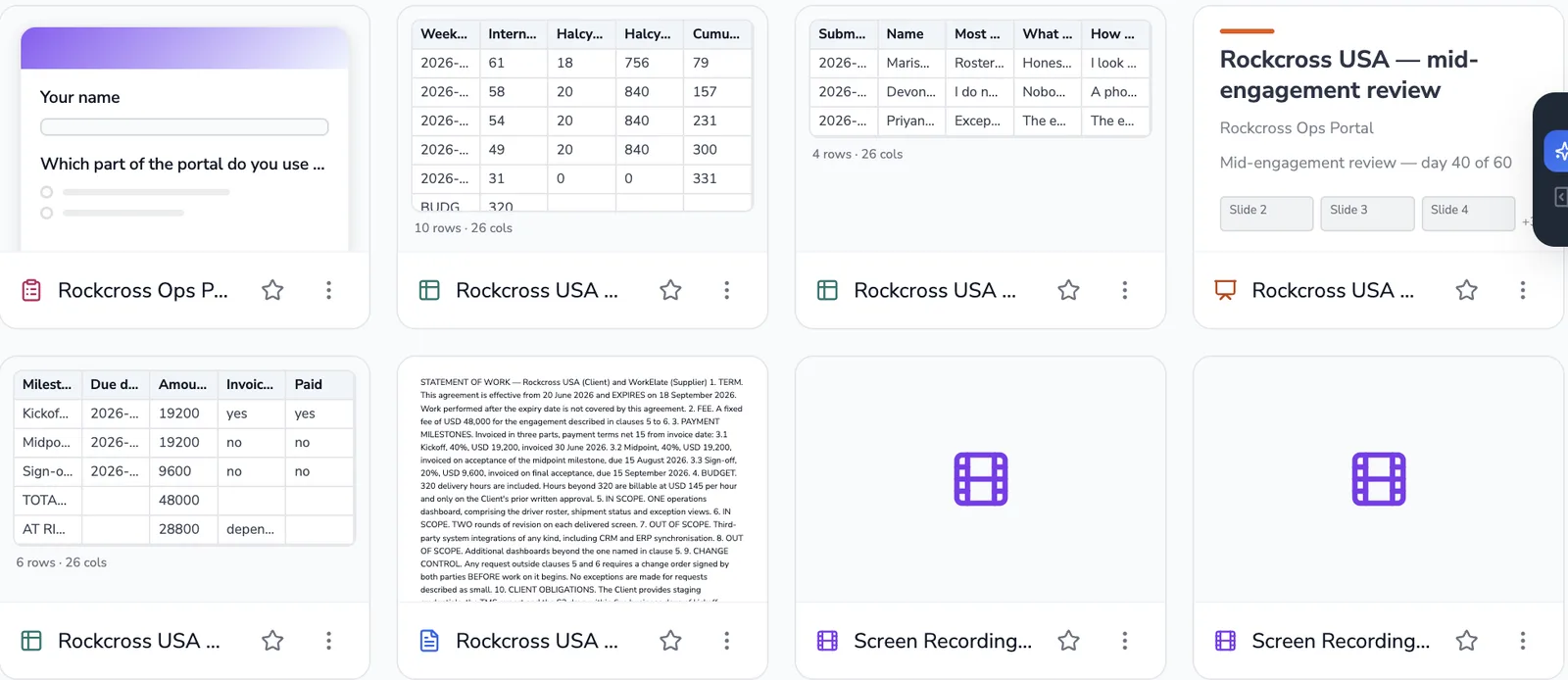
The client arrives as one thing
Brief, deck, open tasks, thread and the next two meetings, because one folder holds this client.
-
Monday 09:11
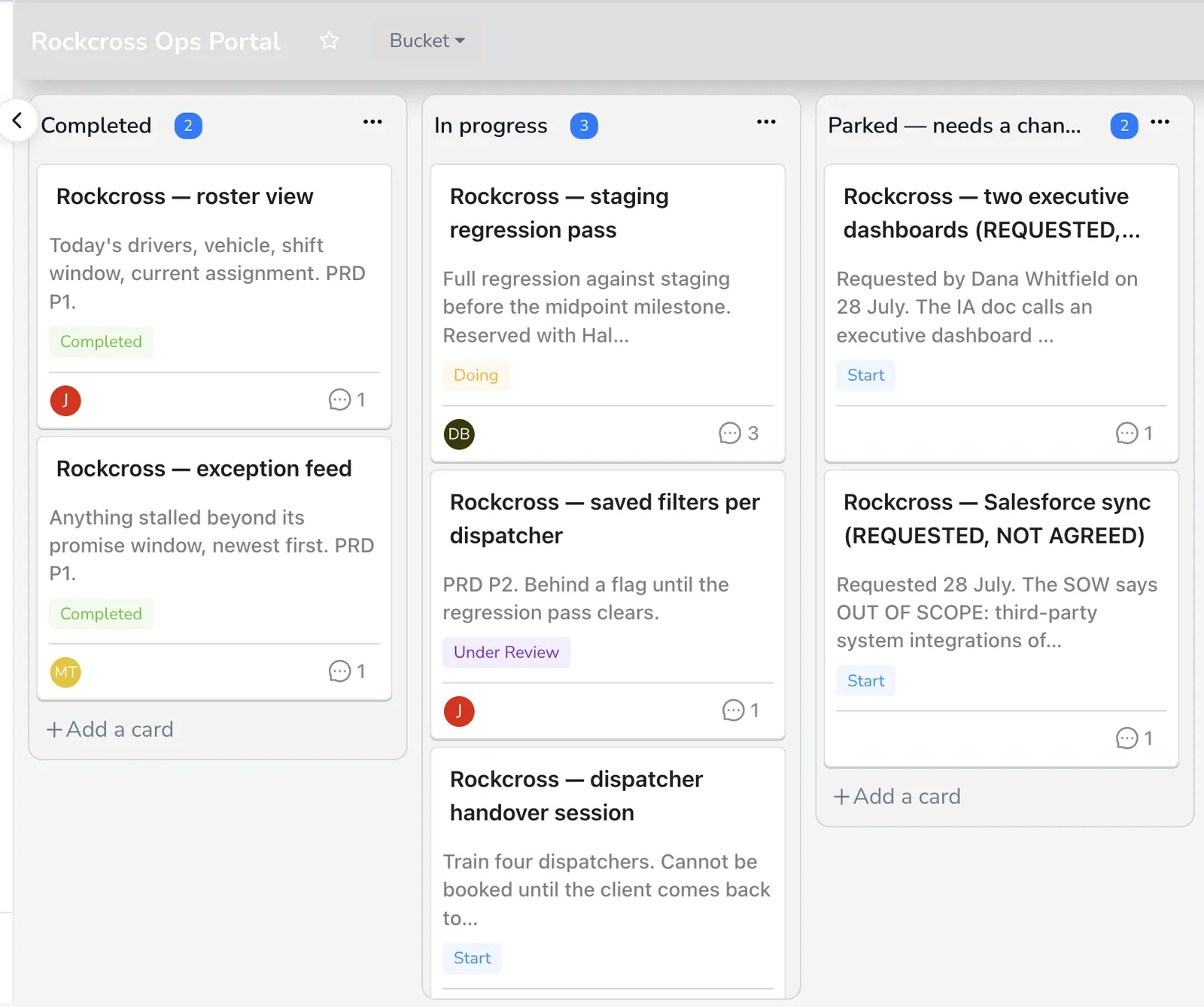
Blocked items carry the reason
Two tasks are blocked, each naming why: five comments waiting on the client.
-
Monday 09:13
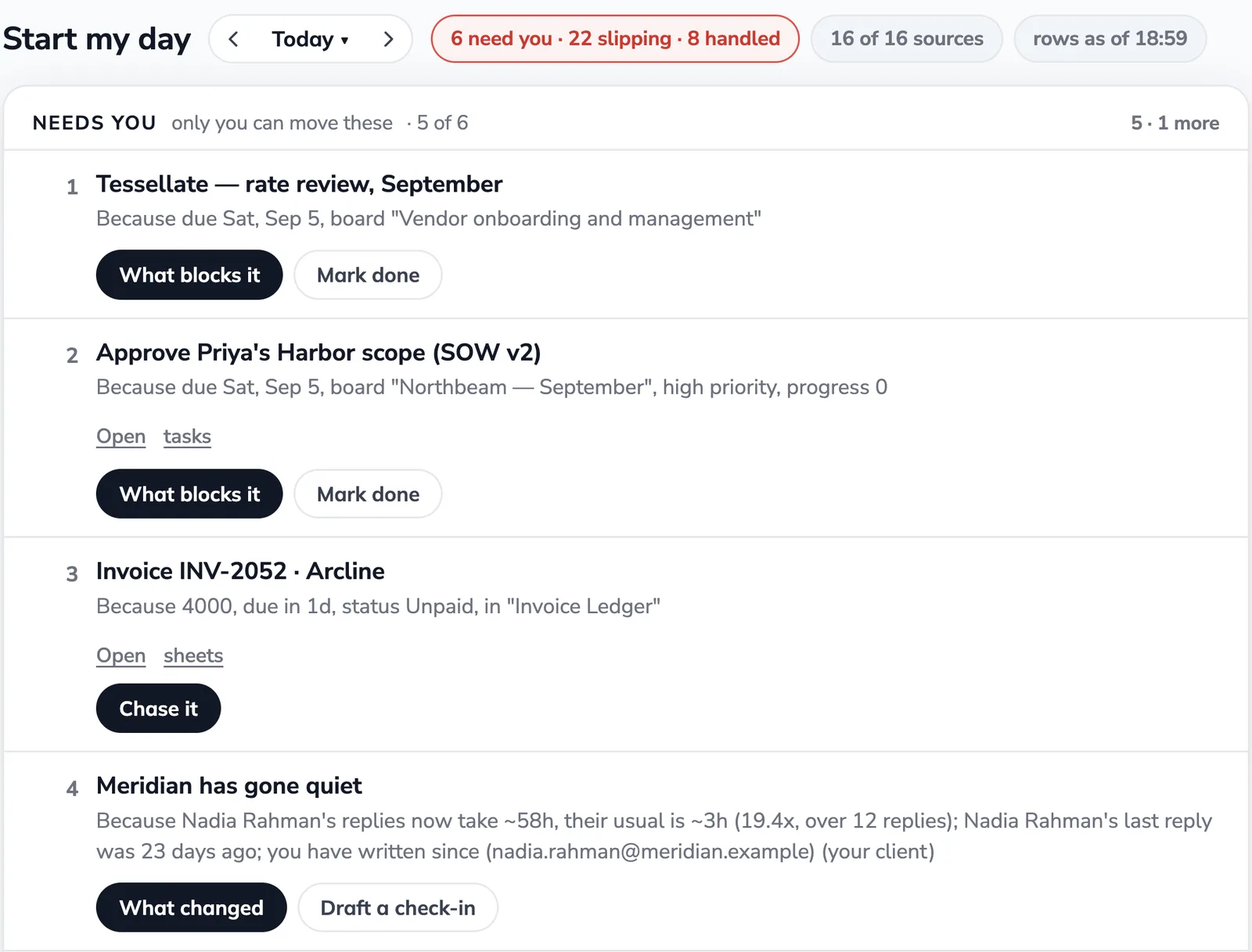
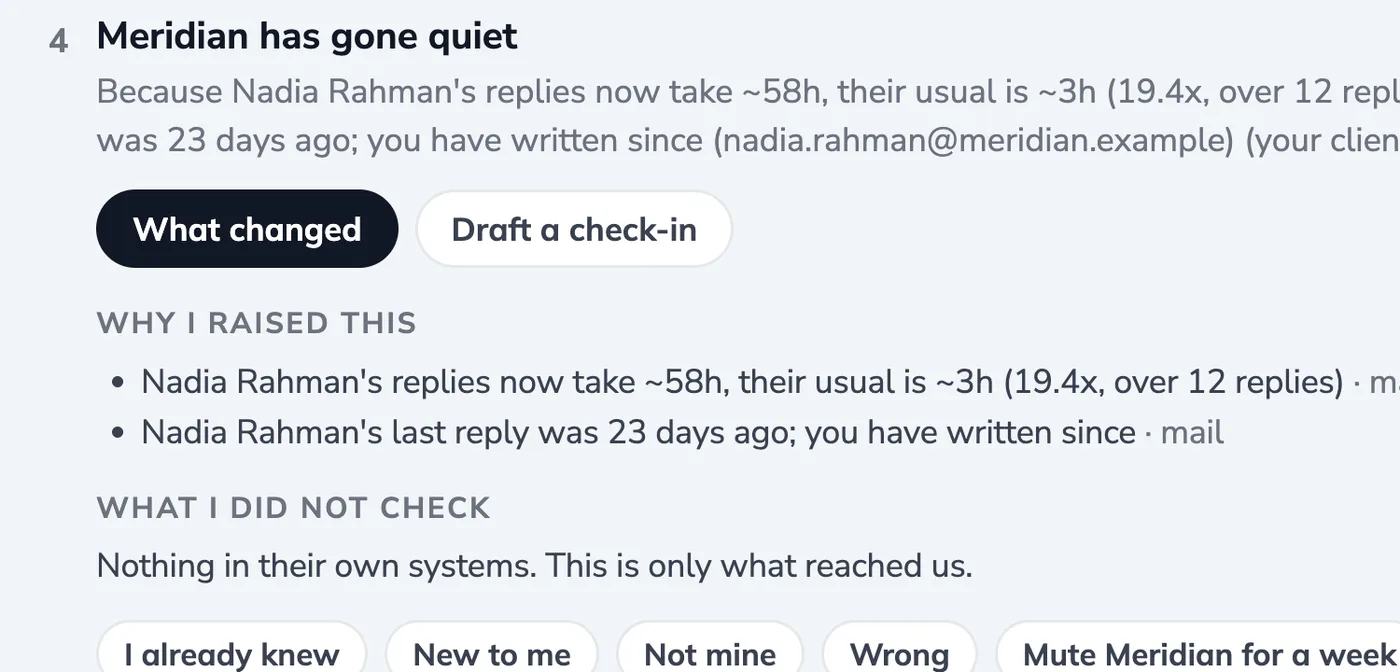
Nine days of silence is a change
Silence is judged like a date moving: against the role, the work around it, and whether to interrupt.
-
Monday 09:14
The chase is drafted in its thread
A reply names the five open comments, the sign-off and the two dates that move if it slips, unsent.
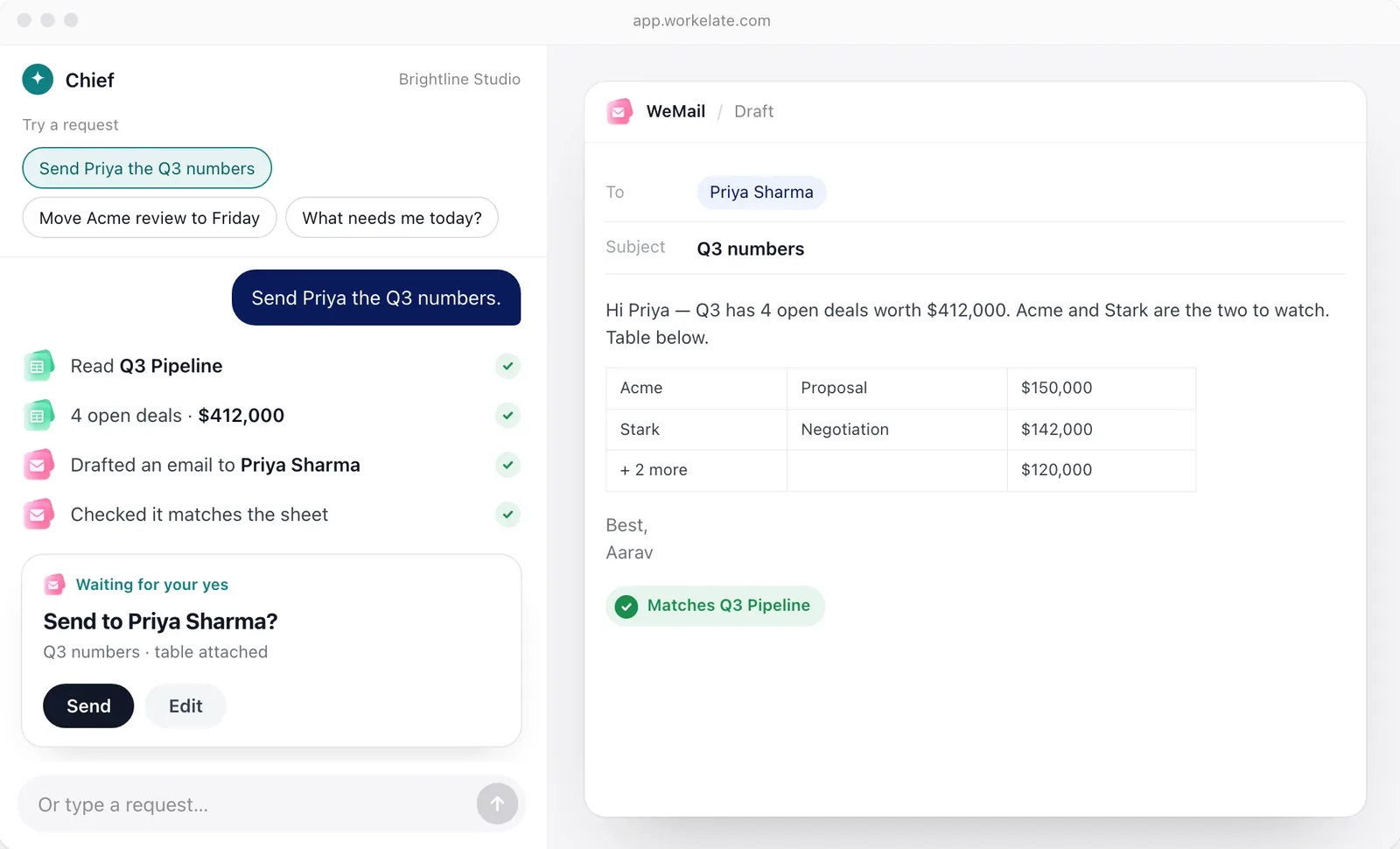
-
Monday 09:16 · a person confirms
The lead edits one line and sends
Sending stops for a person’s yes; the AI cannot approve itself.
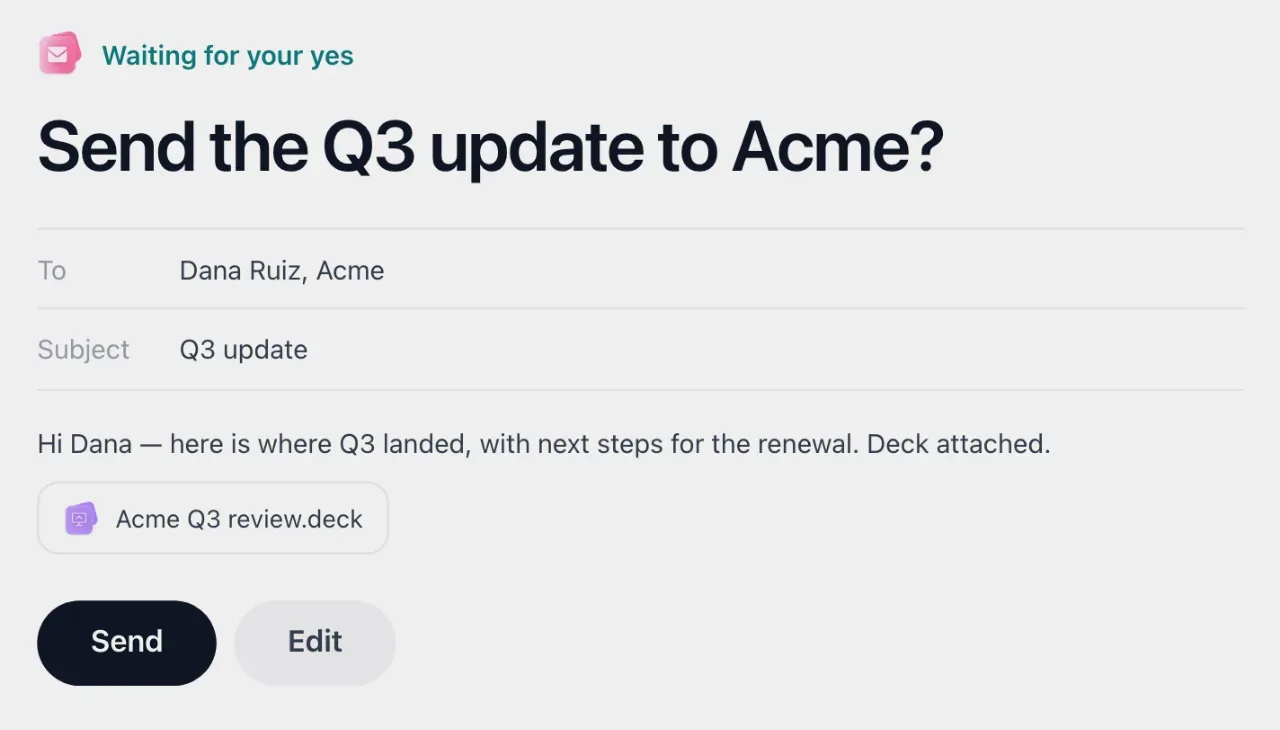
-
Thursday 10:35 · a person confirms
The room’s decisions are written back
Two dates move, one task is reassigned, a follow-up booked; each shown before it runs.
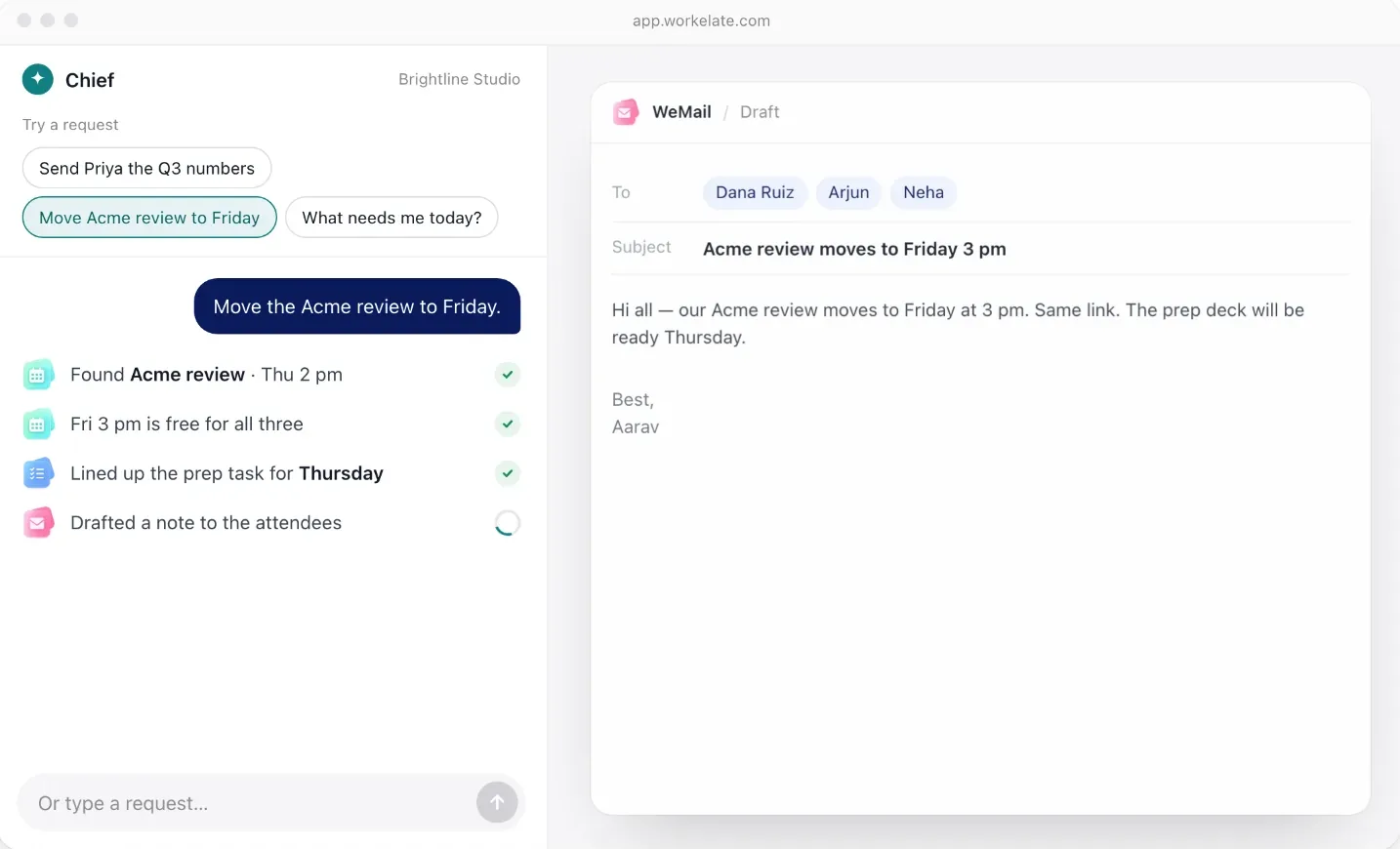
Monday 09:10
Real screens, seeded organization. The full client delivery workflow →
Depth, not app count.
Answer
It can tell you
You ask, it answers from what it sees.
Assemble
Across systems
Deal, thread, ticket and document as one answer.
Watch
Without being asked
It notices change as your systems record it.
Judge
Whether to interrupt you
Capped at 40 an hour company-wide, 5 per person.
Act
And wait for a yes
Draft, move, update. Send, delete and share stop for a person.
Compound
Every decision makes the next cheaper
Your yes and no are kept, so the tenth judgment beats the first.
Three questions, then a stop
Does this matter?
Each change is scored against the person’s role and recent work.
What changed, and why?
Related tasks, threads and past decisions come out of the map.
Is this worth a nudge, right now?
Speak up, stay quiet, or wait.
Most end in silence.
What it will not do.
It does not write without a yes
Chief prepares, a person clicks, then it commits.
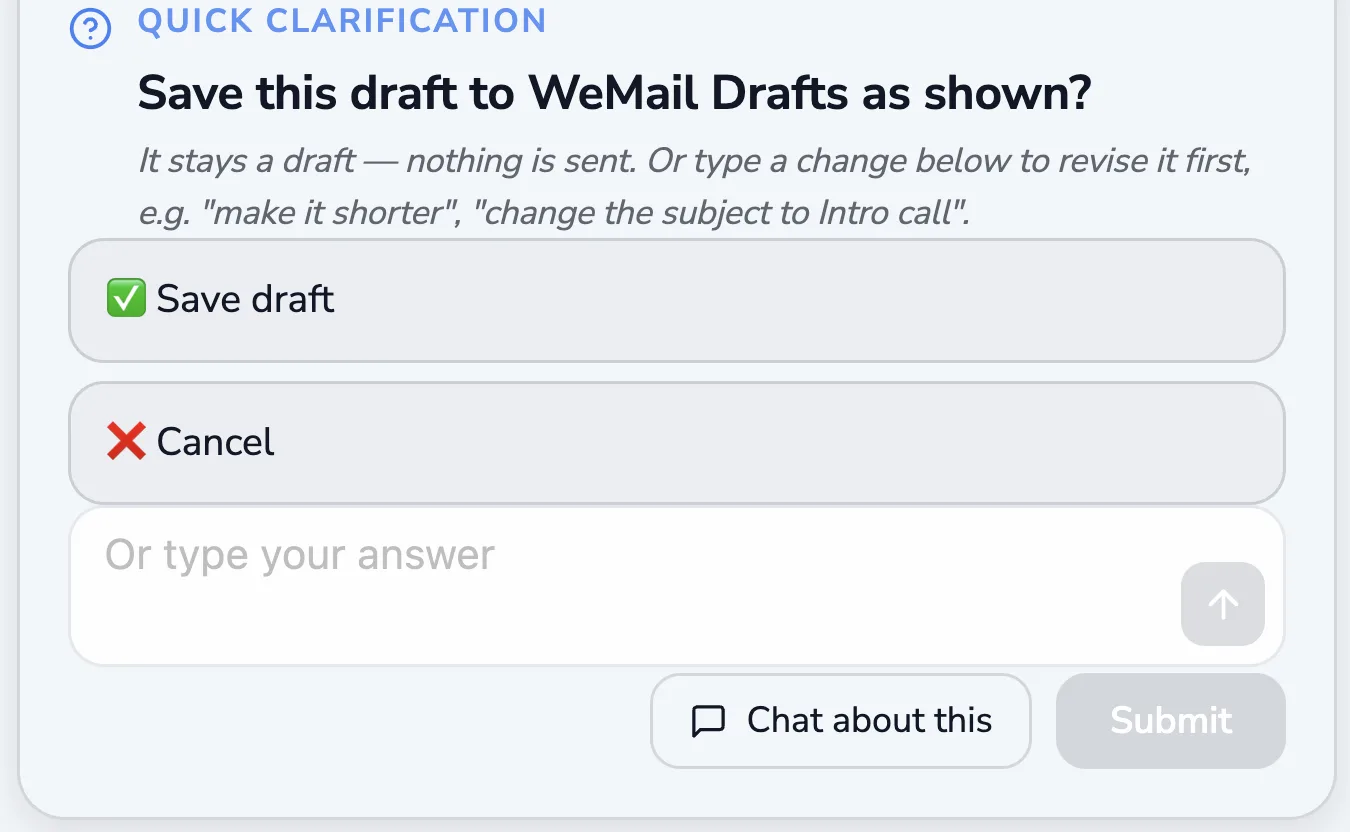
It does not take your memory anywhere
Kept in your own data, never pooled, never used to train third-party models.
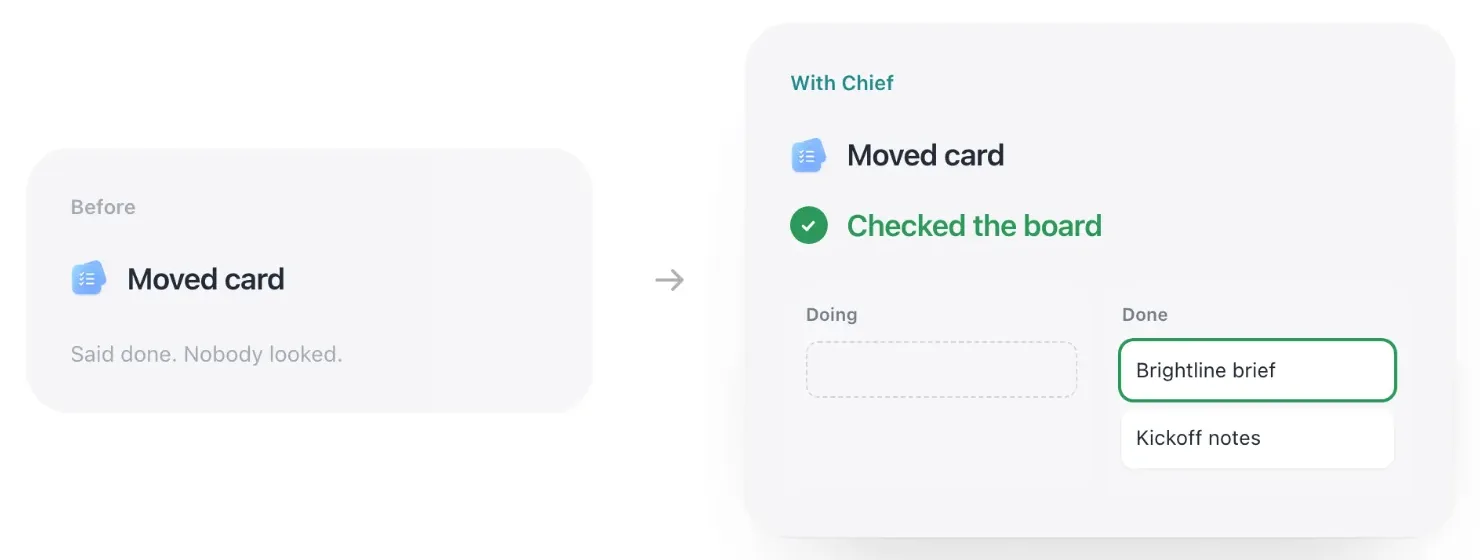
It does not guess to look capable
It checks a change landed before saying so.
It does not nag
Interruptions are capped and the same item never comes back twice.
40an hour, company‑wide
5per person
For the COO, the CIO, the revenue lead
 01
For the COO
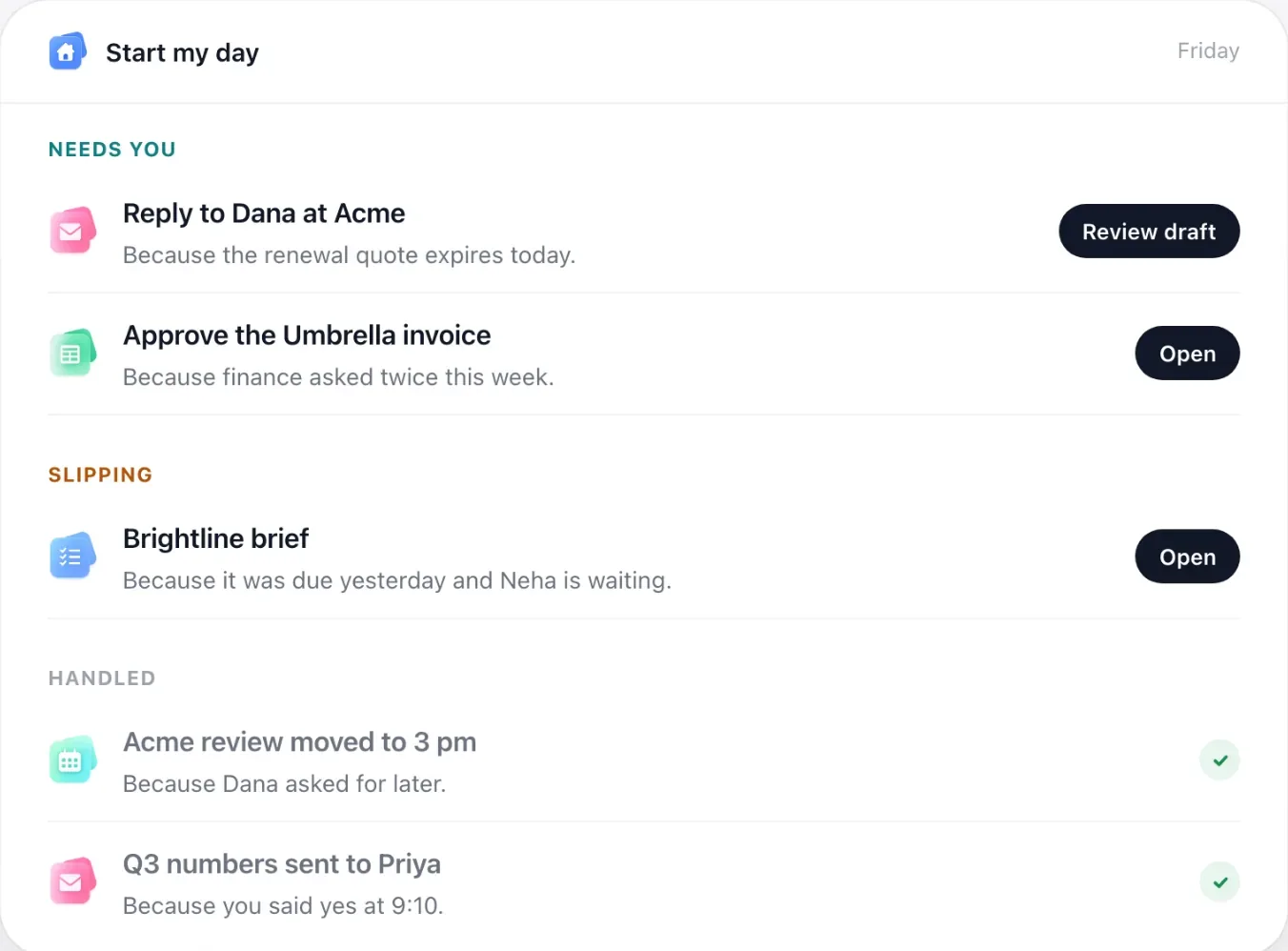
One ranked list of what is slipping, and why.
 02
For the CIO
Nothing replaced, no new system to own.
 03
For revenue
Deals go quiet in a mailbox the CRM cannot see.
Updated 29 September 2026 · WE_AINA
Book a call
See the map drawn from your own systems, in two weeks.