The Brain / Architecture
Built so a person, not a rule, decides.
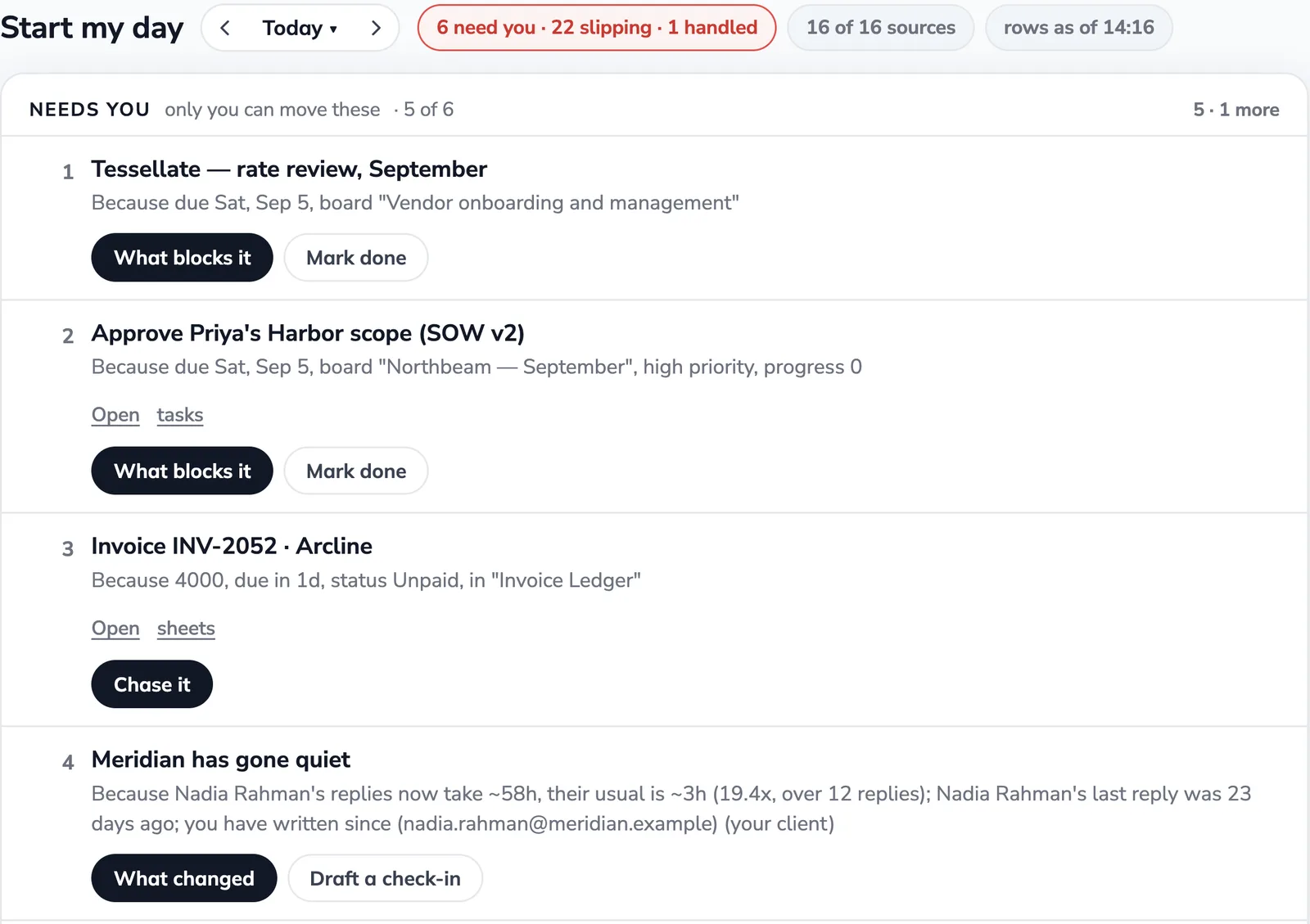
One process for every change, no hand-written rules per case, a stop in front of anything that sends or deletes.
- NoticedEach app reports what it records
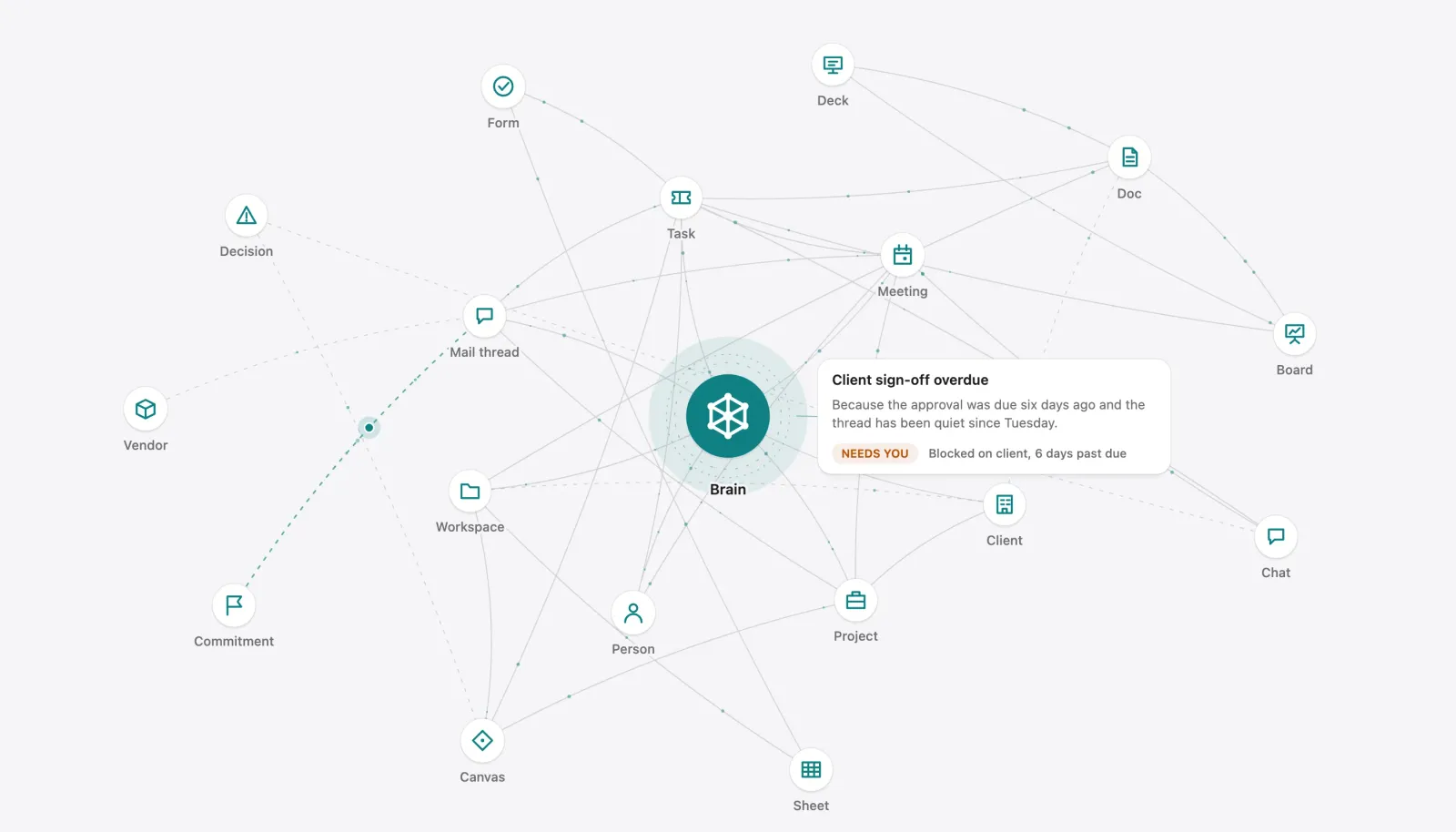
- Put in contextOne map of how the work connects
- JudgedSilence is the default outcome
- Acted on, with a yesSend, delete and share wait for a person
- RememberedThe decision and what happened
What it remembers is read the next time something changes.
One process for every change. Diagram.
One process, not a rules engine
Every change takes the same path: noticed, put in context, judged, acted on with a yes, remembered; the capability inventory lists what it can be asked to do.
No outcome is decided by a written rule
The policy lives in your own documents, read at the moment of the decision; the only fixed logic is reflex.
Why that is the whole bet
One rule per scenario is brittle forever; one reasoner over your documents decides the same event differently for two clients.
The twelfth application test
A new application tells the Brain what it records and can do; the Brain keeps no list to update, so nothing is forgotten.
Context is assembled before an opinion is formed
Each app tells the Brain what it records
A ticket opened, a date moved, an invoice sent; no polling, no scraping.
One map of how your work connects
Every remembered fact is stamped with the company it belongs to, and a question about one client reads that client.
Silence is the default outcome
Each change is scored, read against the surrounding work, and judged once; interruptions are capped at 40 an hour company-wide, 5 per person.
A stop in front of anything that sends or deletes
Fifteen things it can be asked to do reach 287 actions inside our own apps, and 71 of them, everything that sends, deletes or shares, stop for a person.
The AI cannot approve its own action
A yes only counts when a person clicked it, and send and delete stop by category.
Doing and saying are two events
It checks the change landed before telling you it did, then compares its reply against what the tools returned.
It acts only as the person who signed in
Identity and credentials are stripped from the AI's output before an action runs; the security page has the review questions.