The Brain / Capabilities / From signal to finished work
CONNECTFrom something happening to something finished,
one path.
Every change takes the same path, noticed, put in context, judged, acted on with a yes, remembered, and a typed question enters at the same door.
A clause changes on a Wednesday afternoon
Noticed, then put in context
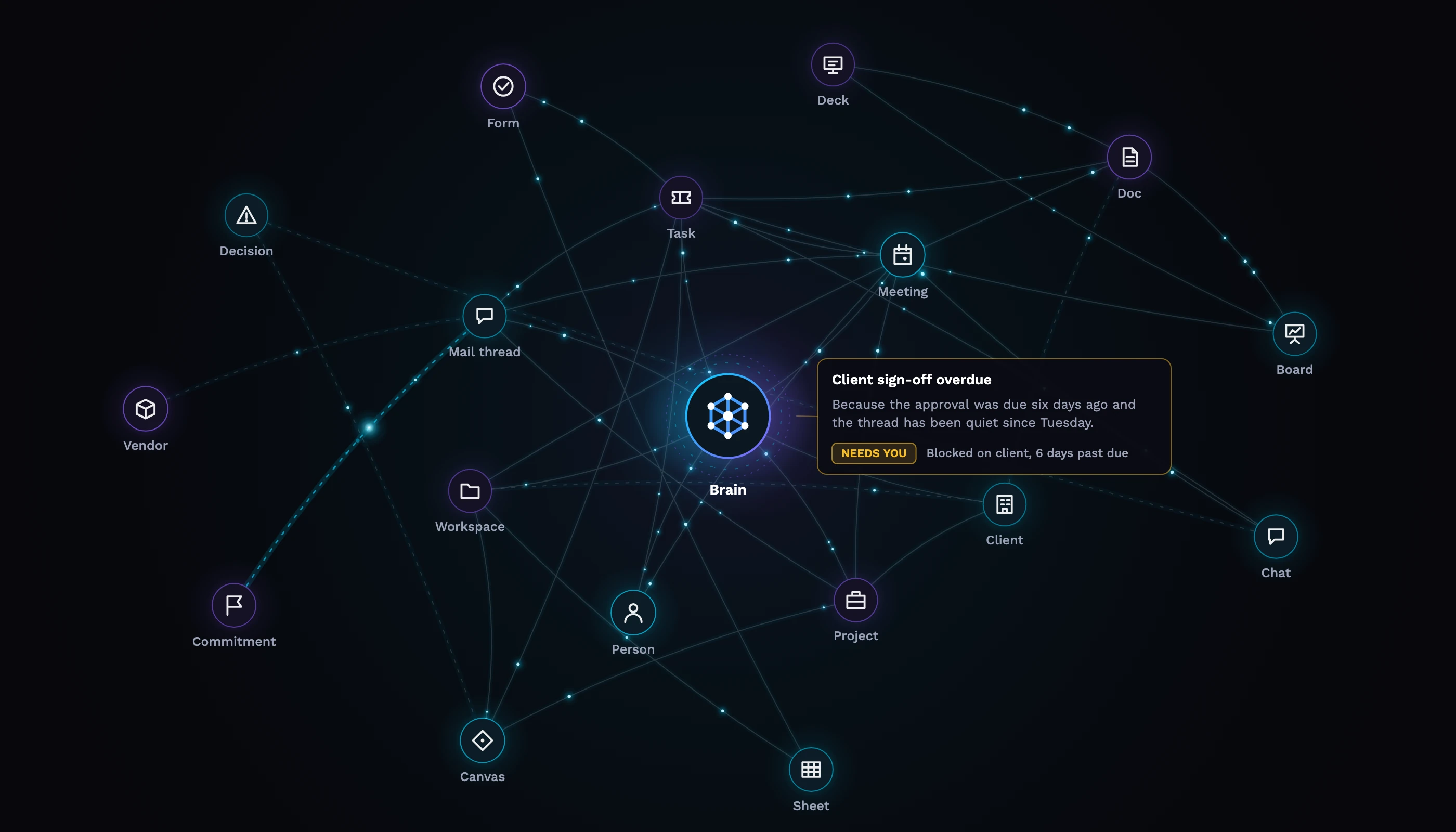
A contract is edited, the app reports it, and the work graph returns the client, two tasks and Thursday’s review.
Judged, usually into silence
Is this worth interrupting this person now, read against the contract, inside a cap of 40 an hour company-wide and 5 per person.
Acted on with a yes, then remembered
A draft note and a re-dated task stop for a human yes; after the click it checks the change landed and keeps the decision.
Where each mechanism sits on the path
Noticing is the apps’ job
The Brain holds no list of apps; each says what it records, the rule on the twelfth application.
Context is where intelligence is added
Improving the system means improving the context assembled, never adding branches, and both doors read one continuous thread.
Acting is governed by reflexes
It acts only as who signed in, gives an honest no, and each claim is checked to have landed and checked against the facts.
Three honest limits
Not autonomy; anything consequential stops for a person.
It never becomes the system that owns your data.
It sees what your systems emit and no more.
Updated 15 September 2026 · WE_AINA
Book a Diagnostic Sprint
Bring the handoff that depends on somebody noticing.