The Brain / Capabilities / The confirm gate
ACTWhatever sends, deletes or shares
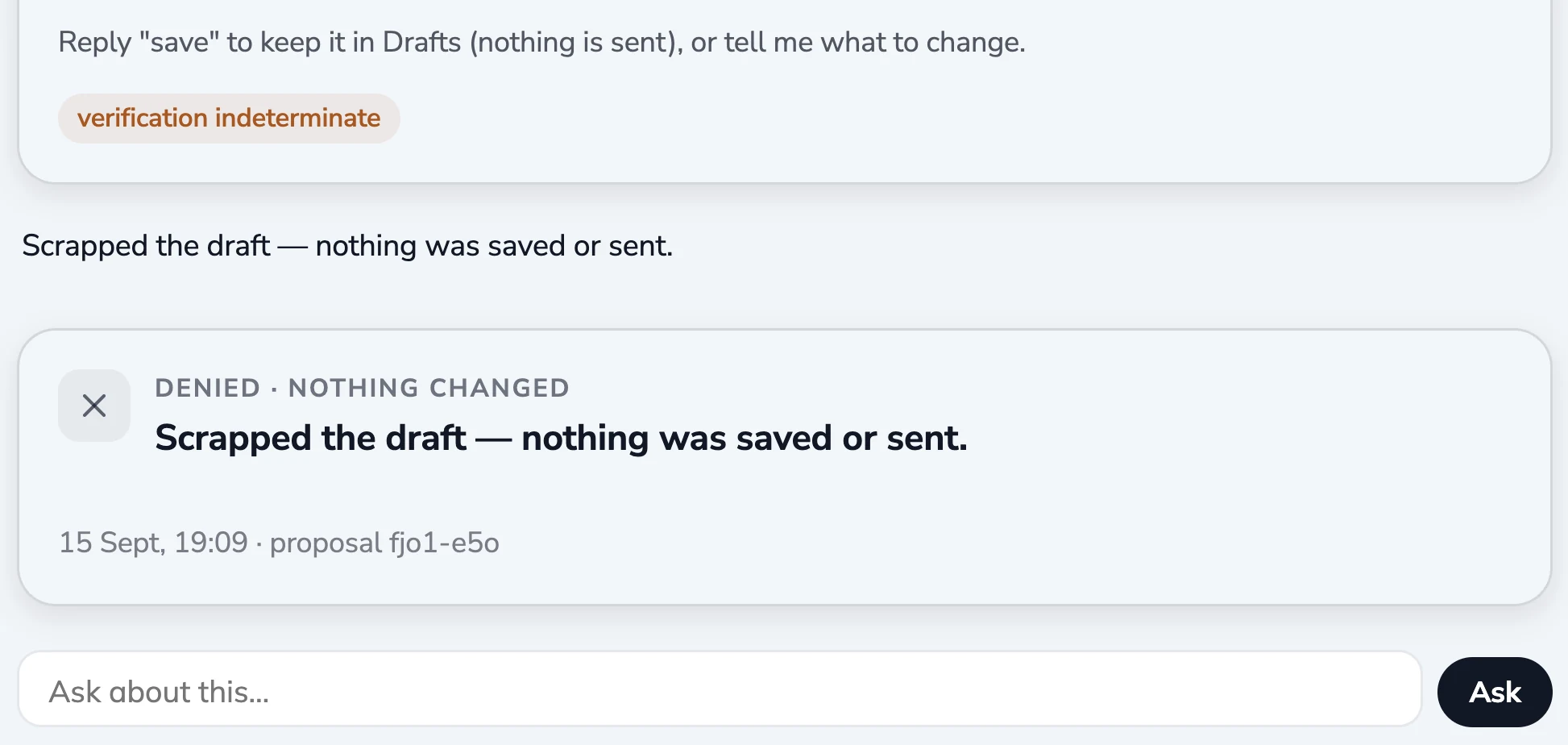
stops for a person.
71 of the Brain’s 287 actions reach outside: send, delete, share. Those stop for a human yes; the AI cannot approve itself.
A chase written, held, then sent
The silence is judged worth a person
Nine days without a reply on an overdue sign-off. Nothing is sent; the item only clears the interruption budget.
The reply is composed, and held
Recipient, subject, body, five open comments named, two dates that move if this slips. Complete, and a draft.
The lead edits one line and clicks
The click happens in the product, signed in as herself. Only then does the send run. Under four minutes, her tone.
Three mechanisms; the second is the argument
Consequential is a property of the action
Anything that deletes or sends stops because of what it is. A new action of that shape arrives already stopped.
Consent is minted at a door
Approval comes from one place: a screen where a signed-in person clicked. No tool reads permission off the text that asked.
The yes belongs to somebody
The Brain acts only as the person who signed in. Anything the AI writes naming a different person is discarded first.
Three honest limits
It proves a yes, not that the decision was good.
It does not stop clicking without reading.
Reading is not gated; who may read is settled per engagement.
Updated 15 September 2026 · WE_AINA
Book a Diagnostic Sprint
Bring the send you would never let a machine make alone.